Friday, December 11, 2009

People of the Spirit: Exploring Luke's View of the Church

I finished reading Graham Twelftree's People of the Spirit: Exploring Luke's View of the Church this past week and I plan on reading it again. When James D. G. Dunn said the book was "challenging and often controversial" he was right. Rarely did I finish a chapter without having to rethink some of my thoughts on Luke and the church. This is not so much a review as a summary of some of the author's conclusions in this outstanding work.

1) The church did not start at Pentecost but with the gathering of the disciples by Jesus.

2) The record of Pentecost as found in Acts 2 is a creation of Luke.

3) There is no evidence for infant baptism but baptism is necessary for conversion.

4) Tongues is not an initial evidence of the baptism of the Spirit.

5) Luke does not see the people of God as a people of the book but a people of the Spirit. We should therefore give greater weight to prophecy, visions and dreams in seeing God guiding the church "without always requiring legitimation from Scripture." (156)

6) The locus of revelation is not found in ancient documents but rather in the "events and experiences in which all subsequent people of God can now be caught up." (212) Luke, he says, would find our "preoccupation with Scripture” puzzling. (212)

7) The "breaking of bread" (Acts 2:42) does not refer to the Lord's supper and Luke shows no real interest in the Eucharist. Neither does Luke have any real interest in the people of God meeting on Sunday.

8) Perhaps most intriguing to me is his insistence that according to Luke the church does not have a two-fold mission: evangelism and social justice. His continued refrain is simple: "Whereas, generally, we preach the good news to each other in our churches and attempt to apply social justice to a pagan world, Luke's view is that the followers of Jesus should present the good news in a pagan world and apply social action and justice to the Christian community." (14, 197, 215) And, "There is nothing in Luke's portrait of Jesus to suggest he was modelling social action towards outsiders." (194) On this point Twelftree cannot be misunderstood: "Social action, in terms of caring for the physical needs of the outsider, plays no part in Luke's view of mission." (203) Indeed, on this issue he admits "the vast majority of the Church would part company with him [Luke] in his seeing neither a political nor a social aspect to the mission." (215)

9) Jesus' primary ministry to those outside the community came in the form of healing and exorcism.

Having said all that Twelftree does not think Luke is trying to create the perfect model for everyone to follow. Given the dependence on the Spirit he says "Luke would agree that development and change are fundamental to the character of the Church." (213) This remark (after #6 above) left me wondering why we were bothering to study Luke so intently or cared what he thought about the church in the first place.

There is so much here to think about and, in many cases, to rethink that I'm going through the book again. Twelftree has made me think hard about many issues. Some are small (To what does the "breaking of bread" refer?) and some are vitally important (What is the mission of the church?).

I don't plan on doing a formal review but I would like to raise some of these issues in some future posts.

Thursday, December 10, 2009

Does "The Twelve Days of Christmas" Contain a Secret Code?

In an earlier post I commented how much fun I was having with a couple of Ace Collins' books showing the stories behind some of our Christmas traditions. I recently read his account behind the song "The Twelve Days of Christmas." As Collins tells the story the "Catholic faith was outlawed in sixteenth-century England" and so the church went underground. Clerics of the day composed poems which, while appearing silly to others, were "veiled works that taught the church's most important tenets." (178) In The Twelve Days of Christmas we have one of those poems. What follows are the key words from the song and their symbolism:

True Love = God
Partridge = Jesus (the partridge being the only bird that will die for its young)
Two Turtledoves = Old and New Testament
Three French Hens = Faith, hope, and love
Four Calling Birds = The four gospels
Five Gold Rings = The Pentateuch
Six Geese a-laying = First six days of creation
Seven swans a-swimming = Seven gifts of the Holy Spirit
Eight Maids a-milking = Those whom Jesus cared most for as enumerated in the beatitudes
Nine Ladies Dancing = The fruit of the Spirit
Ten Lords a-leaping = Ten commandments
Eleven Pipers Piping = The eleven disciples (Twelve disciples less Judas)
Twelve Drummers Drumming = Twelve points of doctrine as found in the Apostles' Creed.

This all sounds very interesting but it has one simple problem: it appears to be little more than a fairly recent legend with no historical credibility. Gretchen Passantino of Answers in Action (a researcher and an early colleague of the late Walter Martin) said she used to tell this story in her travels until she was challenged on it. Upon further research she found the song wasn't as old as the story required and "that it had not been associated with a memory-device catechism until recently." Snopes.com (and Truthorfiction.com) also says the story lacks historical credibility. Both sources say there may have been some confusion with another song called "A New Dial" (also called "In Those Twelve Days") which dates back to about 1625. This song did have a 12-day theme and it does assign a religious meaning to each of the days. Here are the lyrics to "A New Dial":

In those twelve days let us be glad,
For God, by his grace, hath all things made.
What is that which is but one? (Repeat)

We have but one God alone
In heaven above sits on his throne.
What are they which are but two?

Two Testaments, we are told:
The one is New, the other Old.
What are they which are but three?

Three persons of the Trinity,
The Father, Son, and Ghost Holy.
What are they which are but four?

Four Gospels, written true,
John, Luke, Mark, and Matthew.
What are they which are but five?

Five senses we have to tell
God grant us grace to use them well.
What are they which are but six?

Six ages of this world shall last;
Five of them are gone and past.
What are they which are but seven?

Seven days in the week have we,
Six to work and the seventh holy.
What are they which are but eight?

Eight beatitudes are given;
Use them well and go to heaven.
What are they which are but nine?

Nine degrees of angels high
Which praise God continually.
What are they which are but ten?

Ten commandments God hath given:
Keep them right and go to heaven.
Jesus' sake.What are they which are but eleven?

Eleven thousand virgins [martyrs] did partake
And suffer death for Jesus' sake.
What are they which are but twelve?

Twelve Apostles Christ did choose
To preach the Gospel to the Jews.


The story of a secret code in a Christmas carol may be appealing to lovers of The Da Vinci Code but you'll not find it in The Twelve Days of Christmas. The partridge in a pear tree is just a partridge in a pear tree.

Wednesday, December 9, 2009

Keeping the Christmas Story Straight

We sell a lot of manager scenes in the store and many of them come complete with animals, angels and the most complete ones always have the three wise men. Children growing up have these images running through their mind has they're told the story of Mary and Joseph not finding room at the "inn" and so the baby Jesus is born in a stable with all the animals watching and the three wise men presenting their gifts.

Ben Witherington has a nice post entitled Star-Studded Wise Men: Rethinking the Christmas Story. It's worth reading just to be able to separate truth from fiction. Many thanks to my friend Paul who provided this link along with several others related to the Christmas season (He even included a couple of mine. Thank you Paul.) He plans on updating the post as he comes across more items of interest so check back from time to time to see what's new.

Tuesday, December 8, 2009

The Historical Jesus: Five Views - A Review 9 - Essay by by Darrell Bock

Darrell Bock writes the final essay in our book and represents the Evangelical view. Bock agrees that the best place to start the quest is in a Jewish context given our “accumulating knowledge of Second Temple Judaism” but we have to remember that “the Jesus of Scripture is a Jesus remembered.” (250-51) Bock also agrees that we should use the “rules historical Jesus scholars use.” (252) He lists these rules as “multiple attestation, dissimilarity in one of its variety of forms, coherence, Aramaic substratum, embarrassment, cultural appropriateness and/or historical plausibility.” (252) Even using all the same rules Bock admits that the results of the study will vary among scholars and will, at best, give us “access to the gist of Jesus.” (252)

Bock begins by acknowledging that Jesus did, in fact, exist. He points to Josephus, Tacitus, Suetonius and other later Jewish and Roman sources for support. He says, “There is no evidence that those who opposed the movement attributed to him denied his existence.” (253) Bock then begins a trek through Scripture noting “key themes, events and sayings that help us zero in on what Jesus about.” (253) Some of these include Jesus’ association with John the Baptist; the character of Jesus which includes his reaching out to the fringe; the call of Jesus ministry which is a call to total commitment; and the subject of Jesus’ ministry which was the kingdom of God and the promised age of God. Along the way Bock incorporates some of the rules to demonstrate the validity of a certain saying or event. For example, when Jesus rebukes Peter and calls him “Satan” Bock asks, using the criteria of embarrassment, “Would the church create an event where it compares its lead apostle to the paragon of evil?” (261) Another example is the temple incident. Bock says “virtually everyone . . . sees it as important to understanding Jesus.” (268) The church would not have created this event because it sought “to be careful about being seen as seditious, and yet the event plays right into that danger. Thus that it took place best explains its presence.” (269) Bock spends a good amount of time looking at other events or themes such as the Last Supper (271f), the Jewish examination of Jesus (273f), the examination of Jesus by Pilate and the crucifixion (276f) and the resurrection of Jesus after a certain death (278f). With each passage Bock is careful to consider the historical credibility of the event and its significance for understanding Jesus. What does Bock conclude? “A messianic Jesus who saw himself standing at the hub of God’s program and completely vindicated as Son of Man at God’s side produced a coherent, corroborated narrative for the early church. Such an account of him stands solidly rooted in what the historical Jesus actually said and did.” (281)

Next time we'll look at the responses to Bock and I'll give some final impressions of the book as a whole.

Monday, December 7, 2009

Announcing our 3rd Annual Bible Sale

This Thursday and Friday (December 11th & 12th) we will be having our annual Bible sale. All Bibles* will be sold at a 50% discount off the retail price. That's right, 50%! Also, there is a 30% discount off all Bible cases and Bible accessories!

Here's what you need to know:

1) The sale is good for in-stock items only. No special orders.

2) The discount is off the regular retail price. Many of our Bibles have publisher-set sale prices on them. The discount is not off that sale price.

3) The sale is valid for in-store customers only. Sorry, no email or phone orders.

4) We will not put Bibles on hold during this week.

5) No other coupons or other offers may be applied.

6) The sale cannot be applied to previous purchases.

If you are in the area or know someone in the area (call them and tell them to come in) be sure to come in and take advantage of this great buy. We look forward to seeing you. Come early for the best selection. Store hours are 9 a.m. - 9 p.m. on Friday and 10 a.m. - 9 p.m. on Saturday.

* There is one exclusion to the sale and that is the NET Bible. Per agreement with the publisher we will not offer the NET Bible at a discount price.

Sunday, December 6, 2009

2nd Sunday of Advent - Reflections

I've added another book to my Sunday readings. I wasn't looking for anything else to read but stumbled upon this while walking through the store. It's the Ancient Christian Devotional: A Year of Weekly Readings edited by Cindy Crosby. The clincher for me to buy it was that it follows the lectionary cycle C.

I've decided to follow the Revised Common Lectionary for my Scripture readings. I want to allow more time to meditate on the passages I read instead of trying to get too "ecumenical" by following the readings from other traditions (even if they don't vary by much). This week the readings were as follows:

Malachi 3:1-4 or Baruch 5:1-9
Luke 1:68-79
Philippians 1:3-11
Luke 3:1-6

The themes of preparation and repentance are unmistakable. The ESV Study Bible text note on Mal. 3:1 says "From the 'delight' mentioned in this verse, it appears that Israel had repeated the error of their forebears in the days of Amos (Amos 5:18) by supposing that the Lord's appearance would be unmitigated good news. When he comes, it will be not only for blessing, as they assume, but also for judgment--he will come to be a 'witness' (the term in Mal. 3:5 is the same as in 2:14) against all evildoers, including these blasphemous cynics!"

May God prepare our hearts and cleanse them with a refiner's fire as we await his coming. I leave you today with this prayer from Origen as found on the back of The Ancient Christian Devotional.

"Lord, inspire us to read your Scriptures and meditate on them day and night. We beg you to give us real understanding of what we need, that we in turn may put its precepts into practice. Yet we know that understanding and good intentions are worthless, unless rooted in your graceful love. So we ask that the words of Scriptures may also be not just signs on a page but channels of grace into our hearts."

Saturday, December 5, 2009

Why Do We Kiss Under Mistletoe?

I'll admit I've never been a big reader of Christmas books but I've had fun with a couple of the books by Ace Collins. In this book, Stories Behind the Great Traditions of Christmas, we are treated to a potpourri of stories that enlighten us to why or how so many of our Christmas traditions got started and their significance. When I saw there was a chapter on mistletoe I had to read it. How did that get started and why do we need to kiss under it? Here's my thumbnail summary but you really should the whole story.

Mistletoe is a plant that is parasitic in nature and can thrive during the harshest of winters. In ancient times this made mistletoe appear as a kind of miracle plant. When everything else was dying mistletoe was growing. The early Greeks and Celts saw this as only the work of God who could bring a new plant out of a dead winter. Collins writes "Scandanavian warriors would stop fierce battles if they or the opposing soldiers suddenly found themselves under trees where mistletoe grew." (126) The plant became a symbol of peace. Later it began to take on another role--one of protector. Plants were put on doors of homes and barns to ward of enemies and by the Middle Ages it was placed over babies' cribs to ward off illness and evil spirits. Collins continues "As this legend of the restorative power of mistletoe berries migrated to England, the plant became a symbol of love. When a couple passed under the plant, they had to stop and kiss. If they did, God would bless them with everlasting love. Still, to make sure this custom was not abused, the boy had to pick one berry for each kiss. When the berries were gone, the kissing was supposed to end." (127)

About 1843 Christians adopted mistletoe as a Christmas symbol. Christ had promised to bring everlasting life to a barren and hopeless world. Christians in Europe posted mistletoe over their doors not to ward off evil spirits but "to show the world that they believed in the love of God had sent the world through his Son, Jesus Christ. The power of the plant that thrived in the toughest of times also represented their faith. Christians believed that God would see them through persecution, wars, famines, and plagues. His grace would cover them even on the darkest, coldest days." (128) A French legend said that a single sprig of mistletoe grew on the cross where Jesus died. This was sign of God's undying love and showed that new life would spring from the brutality of the cross.

Collins concludes "Today the mistletoe's Christian message of peace, faith, and hope has been largely lost, but even if in a childish fashion, the message of love has remained. . . In a world that often embraces Christmas without embracing its real meaning, maybe it is time to bring mistletoe back into the church. Maybe by having the green sprig with red berries hanging in a house of worship, people can reclaim mistletoe as the symbol of sustaining faith, hope, and love." (130)

Friday, December 4, 2009

Does God Have Wrath?

Does God have wrath? Seems like a simple question doesn't it? Increasingly though it seems that it's not quite right to believe that God has wrath or gets angry. These notions are deemed unworthy of God and are simply the remnants of a less enlightened age. I read yesterday that Julian of Norwich (this is the book I was looking at) did not believe there was any wrath in God and some find this to be a very liberating thought. Some like to create all sorts of caricatures of the wrath of God and then politely ask if that is what we "really" believe about God. When all else fails they pull the trump card--the wrath of God is simply not compatible with his being all loving.

I want to highlight one of my favorite books on the love of God. Now this is not a new book but it is one you should be aware of. It is called Nothing Greater, Nothing Better: Theological Essays on the Love of God edited by Kevin Vanhoozer and is published by Eerdmans. Take a look at the table of contents:

1. Introduction: The Love of God — Its Place, Meaning, and Function in Systematic Theology by Kevin J. Vanhoozer

2. The Concept of Love: Divine and Human by Gary Badcock

3. A Biblical Theology of the Love of God by Geoffrey Grogan

4. Augustine, Christology, and God as Love: An Introduction to the Homilies on 1 John by Lewis Ayres

5. How Do We Define the Nature of God's Love? by Trevor Hart

6. Is Love the Essence of God? by Alan J. Torrance

7. The Wrath of God as an Aspect of the Love of God by Tony Lane

8. Can God Love the World? by Paul Helm

9. Will the Love of God Finally Triumph? by David Fergusson

Postscript: The Love of God: A Sermon on Hosea 11 by Roy Clements

I would like to quote two paragraphs from the chapter by Tony Lane.

"Judgment is according to one's response to the love of God in Jesus Christ (John 3:16-21,36). But why is this? It might appear that God's judgment is no more than the macabre revenge of a jilted suitor. If wrath is nothing more than rejected love, God is open to the following charge: 'Why does he get so angry, then, when we just want to be left alone?' But there is more to the story than simply jilted love. We are God's creatures and own him our love and obedience. We are sinful people who have been 'bought with a price' (1 Cor. 6:20). We are not autonomous beings receiving overtures of love from a neo-Marcionite God who has no more claims upon us than the romantic affections of a stranger. The love that is being spurned is the love of Creature for creature, of the One who has redeemed us at great cost. To reject such love is to turn one's back upon one's only hope and to consign oneself to wrath and judgment." (page 166)

"The fallacy of those who deny the wrath of God lies in the attempt to reduce God purely to love. As Brunner notes, 'the Nature of God cannot be exhaustively stated in one single word.' In particular, the holiness of God must not be suppressed. P. T. Forsyth has made this point forcefully with his talk of 'the holy love of God.' Our starting point should be 'the supreme holiness of God's love, rather than its pity, sympathy, or affection,' this being 'the watershed between the Gospel and the theological liberalism which makes religion no more than the crown of humanity.' 'If we spoke less about God's love and more about His holiness, more about His judgment, we should say much more when we did speak of His love.'" (page 161)

Speak less about God's love and more about his holiness and judgment. Now there's something you don't hear everyday. But don't miss Forsyth's point. The better we understand God's holiness and judgment the more meaningful becomes his love. There's wisdom here but far too many will dismiss it without giving it a second thought.

So, my answer is to the original question is "Yes, God does have wrath and it is not incompatible with his love."

Thursday, December 3, 2009

In Store Now - Speaking the Truth in Love: The Theology of John Frame

I have always loved to read the writings of John Frame. He is one of those writers who writes deeply but has a gift for clarity. Today we received this new title, Speaking the Truth in Love: The Theology of John M. Frame edited by John J. Hughes from P & R Publishing. Some of my favorite books by Frame are Apologetics to the Glory of God (one of the best treatments of apologetics from a presuppositional viewpoint), No Other God: A Response to Open Theism, The Doctrine of God, and The Doctrine of the Knowledge of God. This is only four of the thirteen books he's published. He was also a contributor to the Zondervan counterpoints book Five Views on Apologetics where he defended the presuppositional method against apologists William Lane Craig, Gary Habermas, John Feinberg and Kelly James Clark. Here's how the P&R website describes this newest book:

"Speaking the Truth in Love: The Theology of John M. Frame is a festschrift honoring Prof. Frame's career in seminary teaching. However, this book does not merely collect essays on the subjects of Frame's interests; it analyses Frame's own work in the fields of theology, apologetics, ethics, worship, the church, and others. The authors include Wayne Grudem, Richard Pratt, Paul Helm, Vern Poythress, Bruce Waltke, William Davis, William Edgar, Peter Jones, Reggie Kidd, and others who are familiar with Frame's work. Many are Frame's former students and colleagues. This is the first large-scale analysis of Frame's distinctive approach."

You can find the table of contents here and the first chapter "My Books: Their Genesis and Main Ideas" written by Frame here. This is a great chapter if you're not familiar with Frame since you can get a quick overview of what he's written and his own summary of the main idea of each work. He has a combined website with Vern Poythress with plenty of articles and book reviews. Highly recommended.

I've added this book to my Christmas list. Maybe you'll want to as well. It is a hardcover with 1500 pages (!) and sells for $59.99. From what I've seen already--it's worth every penny.

Wednesday, December 2, 2009

God Rest Ye Merry Gentlemen: Do You Know What You're Singing?

For all these many years I've been singing "God Rest Ye Merry Gentlemen" without giving too much thought to what this particular phrase meant. I suppose if asked I would have said God was giving rest to some happy fellows and encouraging them not to dismay (the next line says "let nothing you dismay.") Was I ever wrong!

I recently read a bit of history on this carol from Ace Collins' book 25 Days, 26 Ways to Make This Your Best Christmas Ever (see chapter/day 3). The carol was written in the Middle Ages by an unknown peasant. The two important words are "rest" and "merry." The words in the historical context take on very different meanings from what we know today. Collins explains, "During ancient times the English meaning for the word rest went well beyond the meaning we attribute to it today. The word also meant "make" or "keep." Thus, when "God Rest Ye Merry Gentlemen" was written, the composer's charge was for listeners to let God make a change in their hearts and minds about the good news found in Christ's birth and life." (27)

Then we come to the word "merry." This was an even bigger surprise. While it could mean "happy" it "was also often employed in place of the word mighty. Robin Hood's companions were known as his Merry Men, but that didn't mean this famous band of warriors was happy; they were powerful. . .When Great Britain was called "Merry Old England," it was the most powerful nation in the world. 'Eat, drink, and be merry' really meant that well-fed troops would always be ready for battle. Thus when taken in context, the new meaning of "God Rest Ye Merry Gentlemen" becomes "God keep you mighty, gentlemen.'" (28)

I've found the same idea found elsewhere (for those who want two or more witnesses). So next time you sing "God Rest Ye Merry Gentlemen" you'll sing it with new meaning and, I suspect, with a little extra boldness. For now, have a mighty Christmas!

Tuesday, December 1, 2009

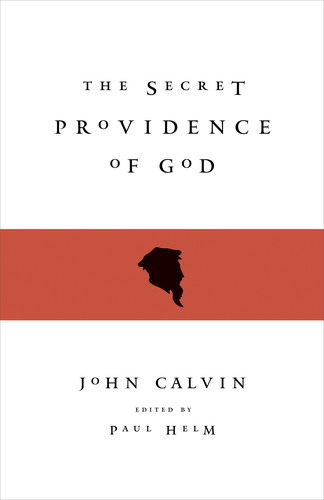
Coming Soon from Crossway: The Secret Providence of God

Before we leave 2009 (the 500th anniversary of John Calvin's birth) I thought you should know about a forthcoming title by Calvin called The Secret Providence of God. Here's the catalog description from Crossway:

"In 1558 John Calvin held a prominent position of leadership in the Reform movement. He had written prolifically and his works had been widely circulated-and critiqued. It was at this time that he penned an answer to a critique of his position on divine providence, as articulated in the 1546 edition of the Institutes. His polemical defense of his beliefs, The Secret Providence of God, reflects the boisterous, argumentative tone of the Reformation era and is Calvin's fullest treatment on this most important doctrine. Unfortunately, in recent decades this work has been largely forgotten.

With this new English translation of Calvin's work, editor Paul Helm reintroduces The Secret Providence of God to students, pastors, and lay readers of Reformed theology. Translator Keith Goad has modernized the English while preserving a Latinized translation style as far as possible. Helm has provided a full introduction, discussing the work's background, content, style, and relation to Calvin's other writings on providence."

This is due out January 31, 2010. It will be a paperback with 128 pages and sell for $15.99.